The world is watching closely to see whether a US–North Korea summit will take place in 2026
This interview was first published in Asahi Shimbun. The following article has been translated into English.
In the news with Jane Hardy
Jane was interviewed by Yoshihiro MAKINO, who writes for a major Japanese daily newspaper the Asahi Shimbun, about the signals coming from North Korea, and prospects for another Trump-Kim summit.
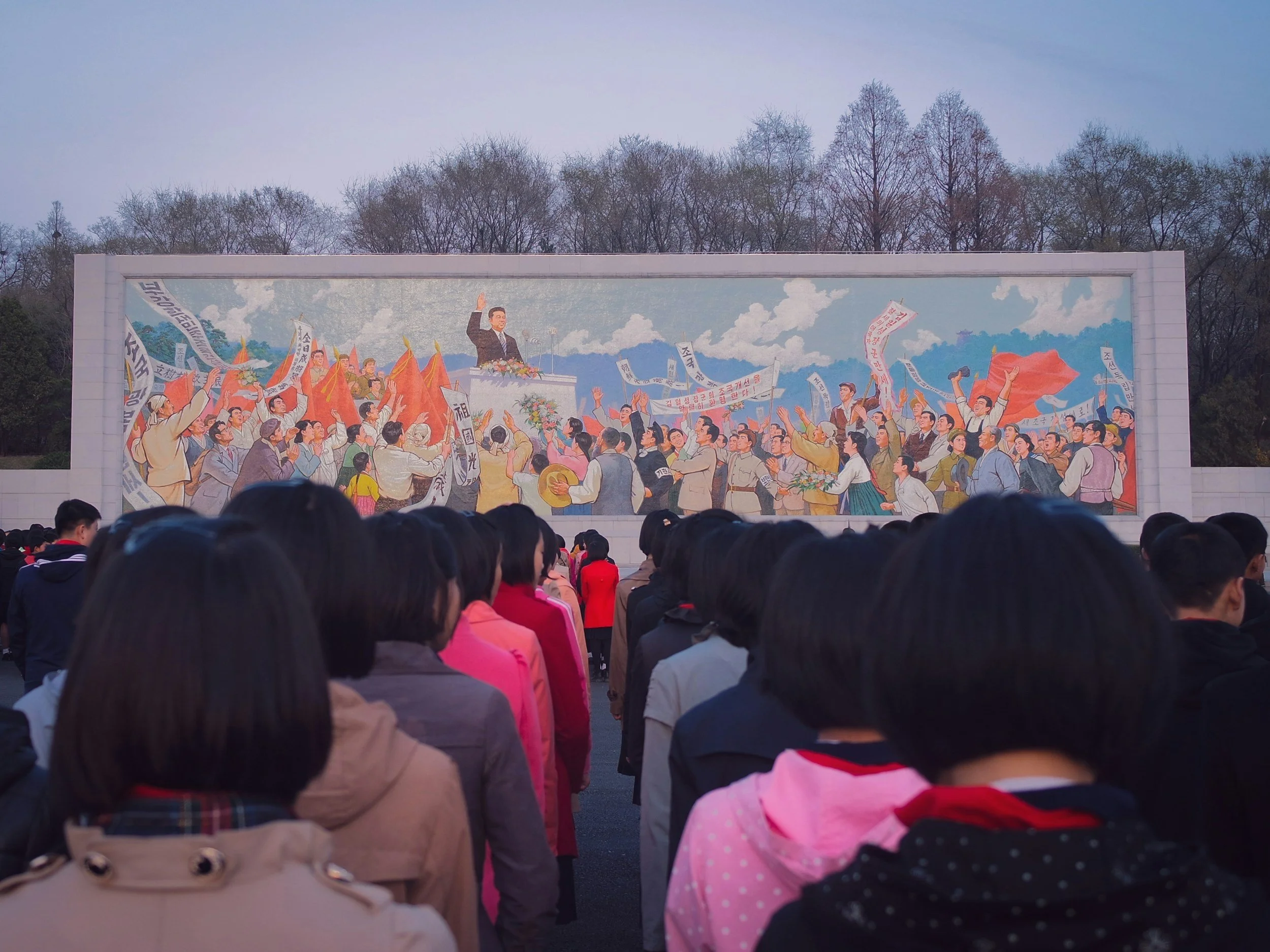
The world is watching closely to see whether a US–North Korea summit will take place in 2026. Former Australian diplomat and ex-Ambassador to Spain, Jane Hardy, who has extensive experience visiting North Korea, says: “Kim Jong-un has no intention of reforming human rights or the political system. The world needs to apply more pressure.”
— What were diplomatic relations between Australia and North Korea like?
Australia established diplomatic relations with North Korea in 1974, but they were severed again in 1975. In 2000, the Australian government decided to resume diplomatic ties. We visited North Korea in October 2001 to hold talks with Foreign Minister Paek Nam-sun and others. My second visit was from late 2003 to early 2004, just after North Korea’s secret uranium enrichment programme came to light. North Korea distrusted us because we wanted them to stop nuclear development. Due to the uranium issue, the Australian government refused to open an embassy in Pyongyang. In 2004, Foreign Minister Alexander Downer visited North Korea, but there was no progress on the nuclear issue. The North Korean embassy in Canberra closed in 2008.
— Your October 2001 visit came right after 9/11
Paek met us twice in Pyongyang. He was nervous about US Air Force units that had flown from Alaska to Osan Air Base in South Korea the previous week. Paek said, “The US is threatening North Korea by deploying air power.” He had witnessed US air power during the Korean War as a boy. But this was not an additional deployment against North Korea—just a post-9/11 repositioning. Still, Paek was unconvinced. It showed us the regime’s paranoid suspicion and how fundamental misunderstandings could arise—a very dangerous situation. US military power is a strong deterrent, but Kim Jong-un today is even more confident in military strength than his father was in 2001.
— It’s said that all Pyongyang citizens foreigners meet are acting
The North Korean officials we met spoke excellent English, were polite and cautious, and stuck strictly to prepared notes. People we saw on the streets never approached us. I think they were careful not to say anything that might upset Pyongyang’s ruling elite. It was a beautiful city, but
almost without electricity. At 6 a.m., loud marching music blared through the streets to wake people up. At midnight, soft music played, signalling bedtime.
— Are North Korean diplomats different from others?
They are friendly but operate in a very different style. They engaged in commercial activities unusual in diplomatic circles. In April 2003, when I was handling Korean affairs in Canberra, the North Korean cargo ship Pong Su was seized off New South Wales for heroin trafficking. North Korean officials frequently contacted me. They cared less about trade or diplomatic outcomes and more about how the Kim Jong-il regime was “respected” and perceived. After the trial, when the captain and crew were deported to Pyongyang, North Korean diplomats focused on recovering the large portraits of the “Dear Leader” (Kim Jong-il) and “Eternal Leader” (Kim Il-sung) that had decorated the ship’s rooms. They showed no concern for the welfare of the detained citizens.
— North Korea is strengthening ties with Russia and China. Do you think a US–North Korea summit will happen?
I think President Trump wants another meeting with Kim Jong-un. Kim values lifting sanctions, but I doubt he will agree quickly. I believe a North–South summit with South Korean President Lee Jae-myung is more likely than a US–North Korea summit.
— Japan fears Trump might tolerate North Korea’s nuclear status. What should Japan do?
Japan should remain a global leader in nuclear non-proliferation. It could work with Australia, New Zealand, South Korea, and Europe to persuade Trump not to recognise North Korea as a nuclear state. I believe China does not want a nuclear North Korea but has effectively accepted it. China still wields influence through the NPT and other treaties and UN mechanisms. We must push China to play a responsible role on nuclear issues.
— Kim Jong-un admires the West yet carries out public executions and terror.
I see his regime as just as brutal and repressive as before. Photos of Pyongyang’s modern skyline or wealthy elites are all lies. Estimates suggest a quarter of North Koreans live at bare survival levels. Many live in misery. Labour camps are visible in satellite images. We must keep up pressure on North Korea’s human rights situation
through UN cooperation, including sanctions. Kim has forged a strong alliance with Russia, receiving billions of dollars, energy, and technology through criminal activities such as worker remittances, cyberattacks, and drug trafficking. He has no incentive to reform.
